


Table of Contents
ToggleIntroduction
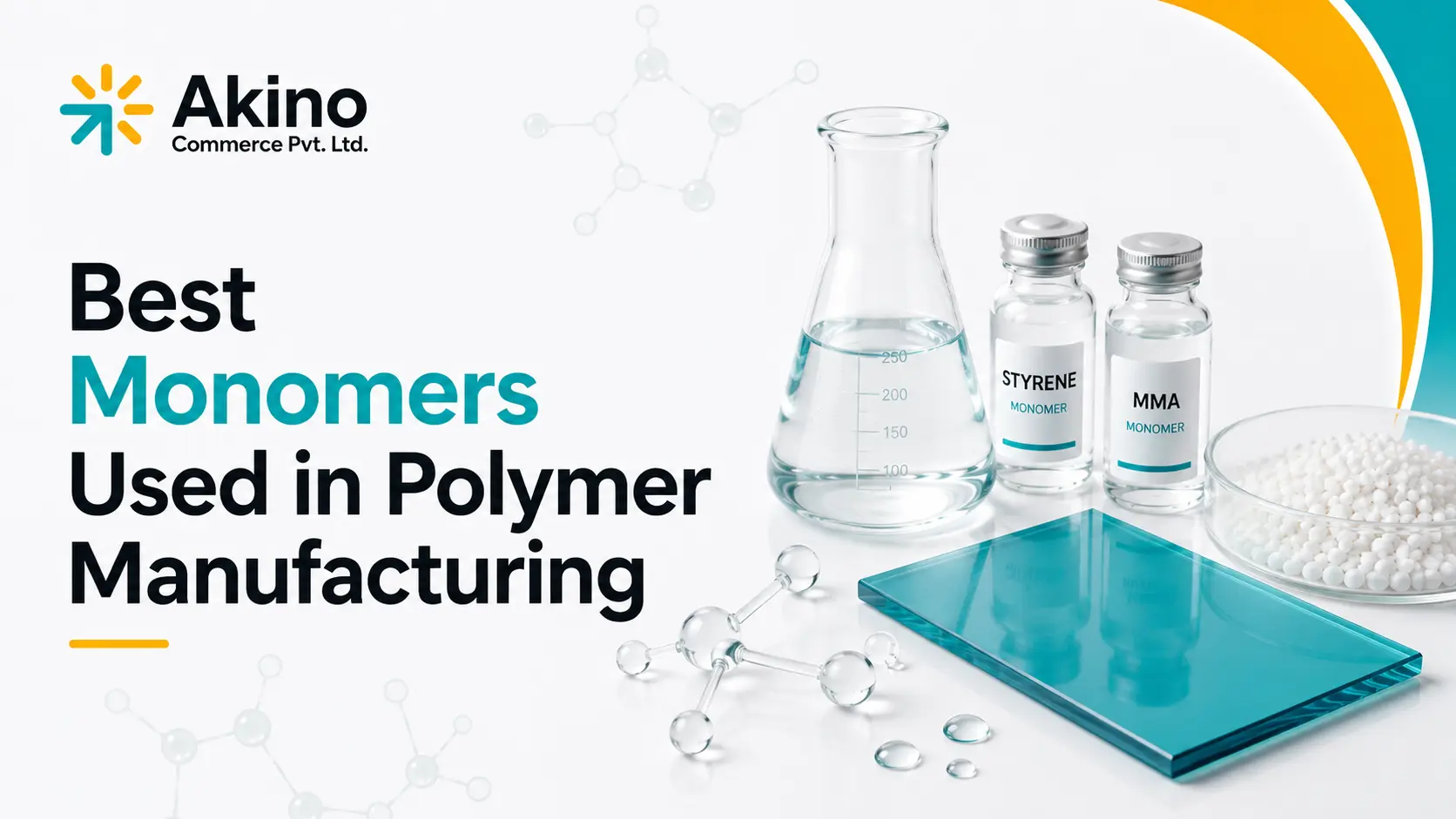
Monomers are small chemical units that are used to make polymers. When many monomers join together, they form large materials, those materials are known as polymers. These polymers are used in many products such as plastics, fibers, coatings, adhesives, rubber like materials, packaging as well as engineering parts.
The type of monomer used decides how the final polymer will perform. Some monomers help to make polymers strong and hard, while others make them soft, flexible, clear, heat resistant or chemical resistant. This is why choosing the right monomer is very important in manufacturing.
Today, manufacturers also need monomers that give stable quality, are easy to process, available in large quantities and also meet safety and regulatory rules. Good monomer selection helps companies in making better, safer and more reliable products.
This blog explains the top monomers that are used in polymer manufacturing, why they are important and where they are commonly used.
Why Monomer Selection Matters in Polymer Manufacturing
Choosing the right monomer is very important because it decides the final quality and performance of the polymer. The right monomer helps the polymer in becoming strong, flexible, stable, easy to process and suitable for its final use.
The right monomer ensures:
- Desired physical and mechanical properties
- Stable polymerization and processing
- Cost and performance optimization
- Compatibility with additives and fillers
- Compliance with industry and environmental standards
If the wrong monomer is selected, the final polymer may become weak, brittle, hard to process, poorly bonded or even discolored. It can also cause production problems and also reduce product quality. So, proper monomer selection helps manufacturers in making better, safer and more reliable polymer products.
Best Monomers Used in polymer manufacturing
1. Ethylene
Ethylene is one of the most important and most widely used monomers in polymer manufacturing. It is mainly used to make polyethylene, which is one of the most common plastics in the world.
- Backbone of polyethylene production
- Enables flexible to rigid polymer grades
- High chemical resistance and toughness
- Excellent processability
Ethylene is used in order to produce different types of polyethylene such as LDPE, HDPE and LLDPE. These materials are commonly used in packaging films, bottles, containers, pipes, cables and in many daily use products. Ethylene is popular because of many different factors and some of them are cost effective, easy to process as well as suitable for large scale production.
2. Propylene
Propylene is an important monomer that is used to make polypropylene. Propylene is a very common plastic that is used in many industries. It is known for its light weight , strong and easy to shape.
- Produces lightweight and strong polymers
- High chemical and fatigue resistance
- Good heat resistance
- Suitable for injection molding and extrusion
Polypropylene that is made from propylene is used in automotive parts, packaging, textiles, home appliances and medical products. It is very useful because it gives a good balance of strength, flexibility, heat resistance and easy processing. It is also recyclable, which makes it important for modern polymer manufacturing.
3. Styrene
Styrene is an important monomer that is used to make strong, hard and clear plastics. It is widely used because it is easy to process and works well with other monomers.
- Enables rigid and transparent plastics
- Good dimensional stability
- Easy to process
- Compatible with copolymerization
Styrene is used to make polystyrene, ABS and other styrene based polymers. These materials are used in packaging, insulation boards, consumer electronics, automotive interiors, home appliances and many molded products. Styrene is useful because it gives good hardness, shape stability, smooth surface finish and easy manufacturing.
4. Vinyl Chloride
Vinyl Chloride is the main monomer that is used to make PVC, which is one of the most widely used plastics in the world. PVC can be made hard or flexible depending on the formula.
- Enables both rigid and flexible polymers
- Excellent chemical and weather resistance
- Long service life
- Wide formulation flexibility
PVC made from Vinyl Chloride is used in pipes, window profiles, cables, flooring, films, sheets and medical products. It is popular because it lasts long and resists chemicals. This makes Vinyl Chloride very important in construction, infrastructure, packaging and in healthcare products.
5. Acrylic Acid and Acrylates
Acrylic Acid and Acrylates are important monomers that are used to make special polymers with strong performance. They are mainly known for good adhesion, clarity and for weather resistance.
- Excellent adhesion properties
- High clarity and UV resistance
- Good weatherability
- Suitable for water-based systems
Acrylic monomers are used in coatings, adhesives, sealants, textiles and superabsorbent materials. They help products in sticking well, staying clear, resisting sunlight and lasting longer in outdoor conditions. They are also useful in water based systems which makes them important for modern low VOC and eco friendly formulations. Due to their strong bonding and durability, Acrylic Acid and Acrylates are widely used in high performance polymer products.
6. Methacrylate (MMA)
Methyl Methacrylate is also known as MMA. It is a high quality monomer that is used to make clear, strong and long lasting polymers. It is mainly used where transparency and good appearance are very important.
- High optical clarity
- Excellent weather and UV resistance
- Good hardness and surface finish
- Long-term durability
MMA is used to make PMMA which is also known as acrylic glass. PMMA is used in automotive lights, sign boards, display panels, construction sheets and optical parts. MMA is valuable because it gives excellent clarity, smooth finish, hardness and outdoor durability.
7. Butadiene
Butadiene is an important monomer that is used to make rubber like and tough polymers. It helps materials in becoming flexible, elastic and resistant to impact.
- Provides flexibility and elasticity
- Improves impact resistance
- Enhances toughness
- Suitable for rubber applications
Butadiene is used in synthetic rubber, ABS plastics and impact modifiers. It is very important in products that need to bend, stretch or absorb shock. Common uses include automotive tires, hoses, footwear, seals and strong plastic parts. Butadiene helps these products to stay tough, flexible and durable during use.
8. Vinyl Acetate
Vinyl Acetate is a useful monomer that is used to make polymers with good adhesion as well as flexibility. It is often used with other monomers in order to improve the final product’s performance.
- Good adhesion and flexibility
- Enables water-based polymer systems
- Easy film formation
- Compatible with eco-friendly formulations
Vinyl Acetate is commonly used in adhesives, paints, coatings, packaging and construction materials. It is also used to make copolymers such as EVA which are known for flexibility, bonding strength and easy processing. Vinyl Acetate is important because it supports water based and eco friendly polymer systems while still giving good performance.
9. Caprolactam
Caprolactam is an important monomer that is used to make nylon-6 that is a strong and durable polymer. It is mainly used in products that need high strength, wear resistance and a long life.
- High mechanical strength
- Excellent abrasion resistance
- Good thermal stability
- Long service life
Caprolactam is used to produce nylon-6 which is widely used in textiles, engineering plastics, automotive parts and industrial components. It is useful because it can easily handle friction, heat as well as tough working conditions.
10. Isoprene
Isoprene is an important monomer which is used to make natural like and synthetic rubber. It helps rubber products in becoming soft, flexible, elastic and also long lasting.
- Excellent elasticity and resilience
- Good fatigue resistance
- High flexibility
- Suitable for dynamic applications
Isoprene is used in various synthetic rubber products such as tires, medical gloves, adhesives, seals and other elastic goods. Its structure is very similar to natural rubber, so it gives strong flexibility and good mechanical performance. Isoprene is mainly useful in products that need to stretch, bend and return to their original shape many times.
How to Choose the Right Monomer for Polymer Manufacturing
Selecting the right monomer depends on different factors such as application, processing method and performance requirements.
Key selection factors
- Target polymer properties (rigidity, flexibility, clarity)
- Processing technique (extrusion, injection molding, emulsion polymerization)
- Environmental and regulatory requirements
- Compatibility with additives and fillers
- Cost, availability, and supply reliability
Best practices
- Conduct lab-scale polymerization trials
- Evaluate long-term performance and aging
- Work with reliable suppliers offering consistent quality
- Balance performance with economic feasibility
Conclusion
Choosing the right monomer is very important in polymer manufacturing because it helps in deciding the final quality, strength, flexibility, clarity, durability and processing of the polymer. Monomers such as ethylene, propylene, styrene, vinyl chloride, acrylic acid, acrylates, MMA, butadiene, vinyl acetate, caprolactam and isoprene are widely used because they support many different industries.
They help in making plastics, rubbers, coatings, adhesives, fibers, packaging, automotive parts, medical products and construction materials. Each monomer has its own role, so manufacturers choose them based on the final product’s use.
A good monomer gives stable production, better performance, lower defects as well as long lasting results. Overall, these top monomers are important because they help manufacturers in creating reliable, cost effective and high performance polymer products for everyday and industrial applications.