


Table of Contents
ToggleIntroduction
Coating additives are used in small amounts, but they also play a very important role in the performance of the products. They help in improving surface finish, stability, durability and also flow of application. The right coating additives can make a clear difference in both product quality as well as application performance whether it is paints, industrial coatings, inks or wood finishes.
If we say simply then additives help coatings in spreading better, looking smoother, lasting longer as well as performing better in different conditions.
If the right additives are not used, then the coatings can face many different problems such as poor leveling, foam formation and reduced durability.
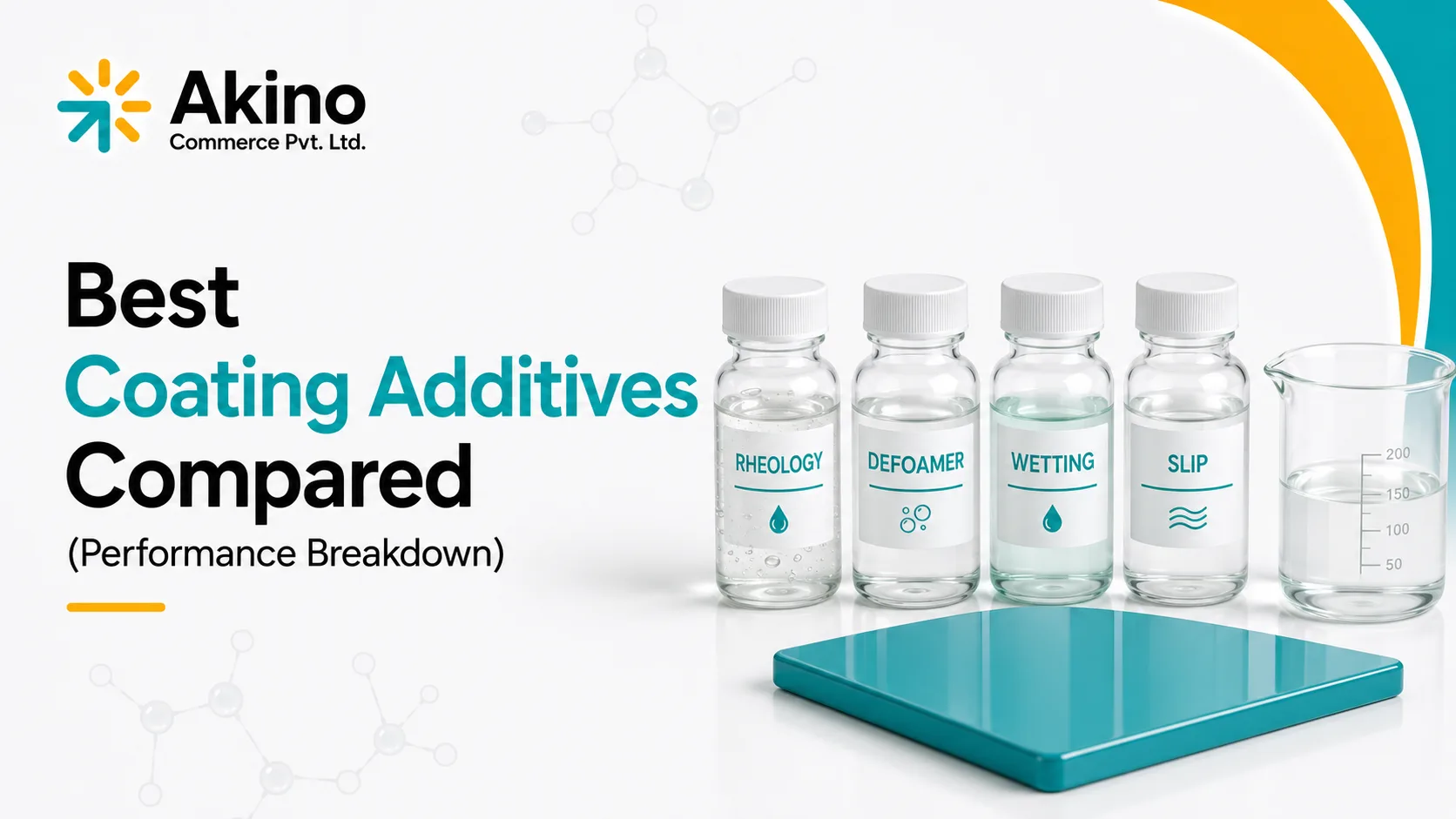
Through this blog, one can have a clear and practical comparison of the top coating additives that are used in different formulations. It explains what each additive does, where it is commonly used and what coating problems it solves.
The main focus while choosing a right additive should be on understanding real formulation in a more practical way rather than just marketing claims. This helps in choosing the right additive based on performance, application needs instead of marketing claims only.
Why Coating Additives Matter More Than Ever
Modern coatings need to meet new demands today. Manufacturers are needed to make coatings that are safer, durable, better looking as well as easier to apply.
But at the same time, production needs to be faster and more efficient. This is one of the main reasons why coating additives have become more important than before.
- Low-VOC and sustainability regulations
- Demanding substrates like plastics and metals
- Higher expectations for appearance and durability
- Faster production and application speeds
Additives help formulators in handling these challenges by improving flow, dispersion, adhesion, stability, drying and resistance properties. If we say simply, then they make coatings easier to produce, supply and better in performance.
Top 10 Best Coating Additives
1. Defoamers
Defoamers are important coating additives that are used both in water based as well as solvent based systems. They help in controlling the foam that is formed during mixing, grinding, filling and application.
Large amounts of foam can create surface detects, lower film quality and also disturbs smooth processing. This is one of the main reasons why defoamers are mainly used in industries and in decorative coating formulations in order to keep production stable and better.
Key Benefits
- Reduces foam during processing and application
- Improves film appearance and finish quality
- Supports smoother production and filling operations
Key Uses
- Water-based paints
- Industrial coatings
- Printing inks and wood coatings
Why It’s Preferred
Helps in maintaining smooth processing and defecting free coating films.
2. Wetting Agents
Wetting agents are basically coating additives that help the liquid in spreading more easily and evenly on the surface. They also help to improve the contact between pigments or fillers and liquid medium that is used in formulation.
Wetting agents support better surface coverage, smoother coverage and more uniform coating results by lowering the surface tension.
Key Benefits
- Improves substrate wetting and coverage
- Enhances pigment acceptance in formulations
- Supports better flow during application
Key Uses
- Decorative paints
- Automotive coatings
- Pigment concentrates and industrial finishes
Why It’s Preferred
Improves substrate contact and more uniform coating application.
3. Dispersing Agents
Dispersing agents are basically coating additives that help in keeping pigments and fillers properly mixed as well as stable in the formulation.
They break down pigment clusters and also ensure that particles stay evenly distributed throughout the coating. This leads to better color strength, consistent glass, improved stability and longer shelf life.
Key Benefits
- Improves pigment dispersion and stability
- Enhances color strength and consistency
- Reduces settling and improves storage stability
Key Uses
- Pigmented coatings
- Colorants and tinting systems
- High-performance industrial coatings
Why It’s Preferred
Supports stable dispersion and stronger pigment performance.
4. Leveling Agents
Leveling agents are used to improve the surface finish of coatings by helping the liquid in spreading evenly before it dries. They help to reduce common surface problems such as brush marks, orange peel as well as uneven texture.
These additives are quite important in applications where smoothness, gloss and overall experience is important.
Key Benefits
- Improves surface smoothness and film uniformity
- Reduces brush marks and surface defects
- Enhances finish quality and gloss appearance
Key Uses
- Decorative coatings
- Industrial topcoats
- Wood finishes and protective coatings
Why It’s Preferred
Helps in creating a smoother and more attractive final finish.
5. Adhesion Promoters
Adhesion promoters are additives that help coatings in sticking better to difficult sources such as glass, plastic, metal and other treated materials.
Adhesion Promoters are useful at places where normal bonding may not be very strong. They help the coating last longer and also reduces the chance of peeling by improving the connection between the coating and surface.
Key Benefits
- Improves bonding to difficult substrates
- Reduces risk of peeling and delamination
- Enhances long-term coating durability
Key Uses
- Metal coatings
- Plastic coatings
- Glass coatings and specialty finishes
Why It’s Preferred
Strengthens coating bond on challenging surfaces.
6. Matting Agents
Matting agents are used when a coating needs a matte or a low shine finish instead of a glossy look. They help in reducing surface shine while still maintaining the overall performance of the coating.
These additives are majorly used in decorative, wood, architectural and industrial coatings where a softer look and more controlled finish is needed.
Key Benefits
- Reduces gloss and controls surface sheen
- Supports premium matte finish appearance
- Helps create consistent surface texture
Key Uses
- Wood coatings
- Decorative paints
- Industrial matte finishes
Why It’s Preferred
Gives controlled low gloss finish with attractive appearance.
7. Slip and Anti-Block Additives
Slip and anti block additives help in improving the surface feel and also reducing friction between coated surfaces. They also stopped coating layers from sticking to each other during stacking, storage or transport.
These additives are very useful in coatings used for packaging, furniture, industrial parts and other surfaces that come into regular contact.
Key Benefits
- Improves slip and surface feel
- Reduces blocking between coated surfaces
- Enhances handling and packaging performance
Key Uses
- Packaging coatings
- Furniture coatings
- Industrial and plastic surface coatings
Why It’s Preferred
Improves handling while reducing surface sticking issues.
8. Scratch and Mar Resistance Additives
Scratch and mar resistance additives are used in coating where surface durability is very important. They help to protect the surface from light scratches, rubbing marks and small damages that can easily happen during daily use.
These additives are commonly used in automotive, wood, electronics and industrial coatings where the surface should look good for longer.
Key Benefits
- Improves surface durability and resistance
- Helps maintain appearance over time
- Reduces visible marks from regular handling
Key Uses
- Automotive coatings
- Wood finishes
- High-performance industrial coatings
Why It’s Preferred
Helps coatings stay cleaner and better looking longer.
9. Rheology Modifiers
Rheology modifiers help in controlling the thickness and flow of coatings during storage, application and drying. They also reduce problems such as sagging, settling as well as uneven application.
These additives are very important for getting the right consistency, specially in coatings that need stable storage and smooth use with brush, spray or a roller.
Key Benefits
- Controls viscosity and flow behavior
- Reduces sagging and sedimentation
- Improves application consistency and storage stability
Key Uses
- Water-based coatings
- Architectural paints
- Industrial and textured coating systems
Why It’s Preferred
Improves flow control and overall formulation stability.
10. Corrosion Inhibitors
Corrosion inhibitors are used in protective coatings in order to reduce metal damage as well as rust that is caused by moisture, air and chemical exposure. They help in protecting the metal surface for a longer time and improving the overall life of both the coating and the substrate.
Corrosion Inhibitors are majorly used in industrial work, marine, infrastructure and metal protection coatings.
Key Benefits
- Improves corrosion resistance on metal surfaces
- Extends coating and substrate life
- Supports long-term protection in harsh conditions
Key Uses
- Metal primers
- Industrial protective coatings
- Infrastructure and maintenance coatings
Why It’s Preferred
Provides added protection in demanding metal applications.
Conclusion
Coating additives may be used in small amounts but they also make a big difference in how a coating performs during production, application and final use. Each additive has its own role in improving formulation quality as well as overall performance whether it is wetting and dispersion to foam control, adhesion, matting or corrosion protection.
Manufacturers can easily understand which type is most suitable for their product needs through a clear comparison.
Choosing the right additive is not only about better performance but it is more about better consistency, efficiency as well as product fit.
When you choose a reliable sourcing partner like Akino Commerce and right additive range, it can help you in reducing defects, improving finish quality and building coating systems that perform well across different industrial uses.